Reaching out to a construction company for the first time can feel uncertain, particularly if you are not a regular participant in the construction industry. What information will they ask for? How specific do you need to be about your project at the first contact? What happens after the initial conversation? For property owners, developers, and business operators in San Antonio who are ready to move forward with a construction, demolition, excavation, concrete, or asphalt project, understanding how to initiate and navigate that first engagement with a professional contractor makes the process considerably smoother.
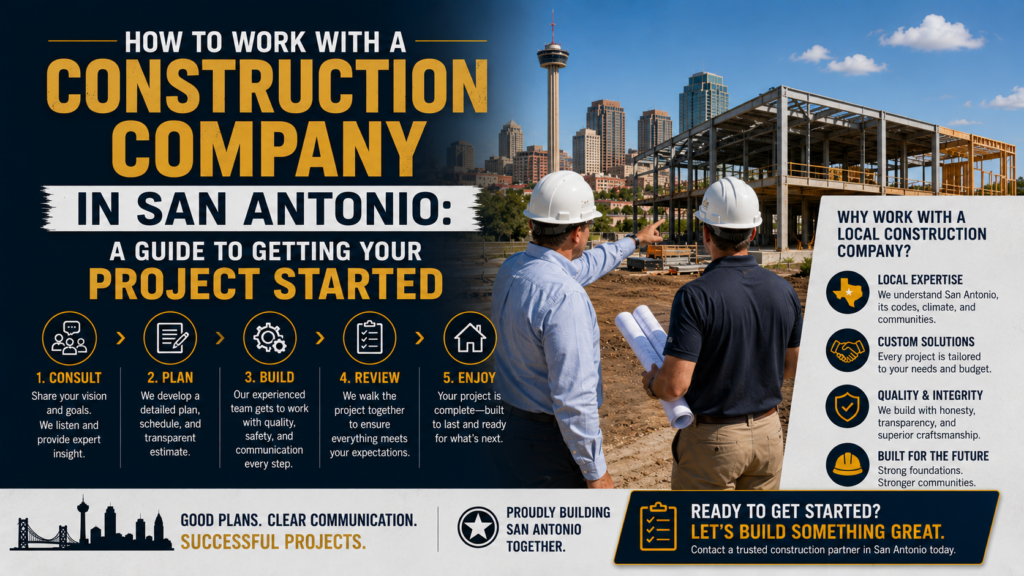
This guide walks through what to expect when you contact a construction company in San Antonio, what information to prepare, and how the process typically unfolds from first contact to project execution.
Before You Reach Out: Getting Clear on Your Project
The most productive first conversations with a construction company happen when the property owner or developer has done some initial thinking about their project before picking up the phone or sending an inquiry. You do not need to have a complete set of engineering drawings or a fully specified scope of work that level of detail develops through the contractor relationship but having answers to a few basic questions makes the initial conversation much more productive.
Location is the most fundamental piece of information. For a contractor in San Antonio, knowing where the project site is allows them to assess logistical considerations, their familiarity with the specific area, and any site-specific factors they are aware of. San Antonio’s geography from the limestone terrain of the north to the clay soils of the south means that location meaningfully influences how a project must be approached.
Project type is equally important. Are you demolishing a structure to clear a site? Preparing land for construction? Pouring a concrete foundation or driveway? Repaving a parking lot? The nature of the work determines which disciplines are engaged, what equipment is needed, and what the relevant sequencing considerations are. Being able to describe the work you need at a general level even if you cannot yet specify all the details is sufficient for an initial conversation.
Timeline and urgency are also worth thinking through before you reach out. Some projects have hard deadlines a business that needs to open by a certain date, a development with a committed delivery schedule, or a property where deteriorated infrastructure poses an active safety or liability risk. Others have more flexible timing. Communicating your timeline at the outset allows the contractor to understand whether their current schedule can accommodate your needs and to be transparent with you if it cannot.
What to Expect from the First Contact
When you Contact Diverse Construction San Antonio Group or any professional construction company in San Antonio, you should expect a prompt, professional response from someone who is genuinely interested in understanding your project. The first conversation is a mutual assessment you are evaluating whether this company can serve your needs, and the company is evaluating whether the project is within their capabilities, schedule, and service area.
During this initial conversation, the contractor will typically ask questions about the project type, location, approximate scale, and timeline. They may also ask about the current condition of the site whether structures need to be removed, whether utilities are currently active, whether there are any known site conditions such as rock or poor drainage that may affect the work. Providing honest, complete answers to these questions, even if some of your answers are ‘I’m not sure,’ is the best approach. Experienced contractors are used to working with clients who are not construction professionals, and they will help you identify what additional information may be needed.
For larger or more complex projects, the contractor will likely want to conduct a site visit before providing any meaningful project assessment. A site visit allows the contractor’s team to observe actual site conditions, ask follow-up questions, and develop the understanding needed to provide a thoughtful scope of work and project approach. Site visits are typically offered at no charge by established contractors and should be understood as an investment in ensuring that the proposal they provide is genuinely responsive to your project’s needs.
Providing the Right Information
Several pieces of information are commonly useful when initiating a construction project engagement in San Antonio, regardless of the specific project type.
Property ownership and authorization to proceed. Construction contractors need to know that the person engaging them has the authority to authorize work on the property. For owner-occupied properties this is straightforward. For properties with multiple owners, corporate ownership, or tenants in occupancy, the contractor may need to understand who is authorizing the work and in what capacity.
Existing documentation. If you have existing surveys, engineering drawings, architectural plans, or prior permit records related to the property, sharing these with the contractor is valuable. Even if they are outdated, they provide useful context about the property’s history and existing conditions.
Known site conditions. Any information you have about site conditions subsurface issues encountered in prior excavation, drainage problems, the presence of hazardous materials from prior use, utility locations should be shared with the contractor. This allows them to plan appropriately and reduces the risk of unexpected conditions causing disruption or additional cost during the project.
Adjacent property and regulatory context. For projects in urban San Antonio, information about adjacent properties, easements, setback requirements, or zoning constraints that affect the project is relevant to how the contractor will plan the work.
The Proposal and Scope Development Process
After the initial consultation and site visit, a professional construction company will develop a proposal that describes the scope of work, the approach to executing it, and the terms of the engagement. This is the document that forms the basis of the contract, so it is worth reviewing carefully and asking questions about anything that is unclear.
A well-structured construction proposal includes a clear description of what work will be performed, what materials will be used, what tasks are the owner’s responsibility versus the contractor’s, and what the project schedule looks like. It should also address what is not included exclusions and clarifications that define the boundaries of the scope. Clear scope documentation prevents misunderstandings about what is being delivered, which is the source of most construction disputes.
Do not hesitate to ask questions about the proposal. Experienced contractors expect clients to want to understand what they are committing to, and the willingness to answer questions clearly and completely is itself a sign of a professional organization.
What Happens After Contract Execution
Once a contract is signed, the project moves into pre-construction preparation. For permitted work which includes most demolition, major excavation, structural concrete, and site improvement projects in San Antonio the contractor will typically prepare and submit the required permit applications. Permit processing time varies; experienced local contractors understand the typical timelines and factor them into the project schedule.
Material procurement, subcontractor scheduling, equipment mobilization planning, and utility notification (including 811 locate requests before any excavation) all happen during this pre-construction period. You may not see much activity at the site yet, but significant organizational work is underway to set up the project for an efficient construction phase.
Once construction begins, you should expect regular communication from your contractor about progress, any conditions encountered, and upcoming milestones. Ask at the outset how the contractor prefers to communicate and how frequently you can expect project updates. Establishing clear communication expectations at the start prevents frustration later.
Building a Long-Term Contractor Relationship
For property owners and businesses in San Antonio who manage multiple properties or undertake construction projects on a recurring basis, building a relationship with a reliable construction company has compounding value. A contractor who knows your properties, your preferences, and your standards does not need to be re-educated with each new project. They can respond faster, anticipate your needs, and provide more accurate and efficient service as the relationship develops.
Diverse Construction Group’s presence across multiple construction disciplines means that an owner who uses them for one project say, a concrete driveway can call on the same relationship for a future demolition project, excavation need, or asphalt repaving job. The consistency of working with a company you know and trust, and that knows your properties and standards, is a genuine business advantage in a market where finding reliable contractors can otherwise require significant time and vetting effort.
Conclusion
Starting a construction project in San Antonio begins with a conversation. That conversation goes better when both parties come prepared the property owner with a clear sense of what they need and the relevant facts about their site, and the contractor with the questions and expertise to translate that information into a professional project approach. Diverse Construction Group is ready to begin that conversation with property owners, developers, and businesses across San Antonio, bringing broad construction capability and local market knowledge to every project they undertake.